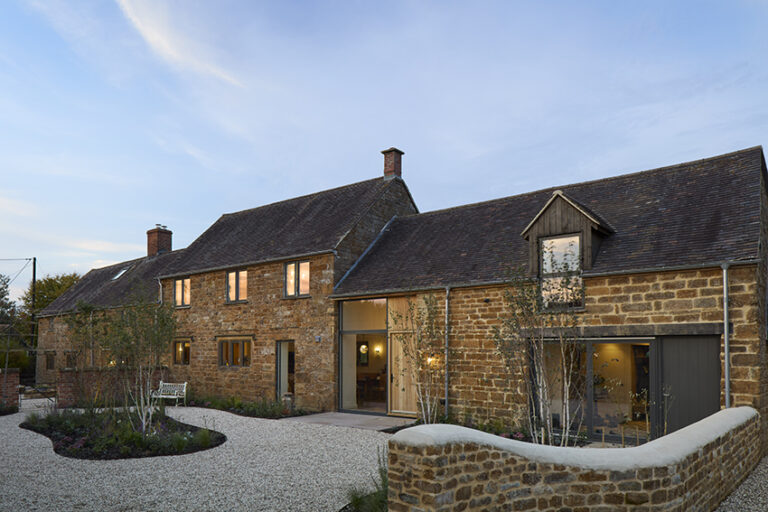
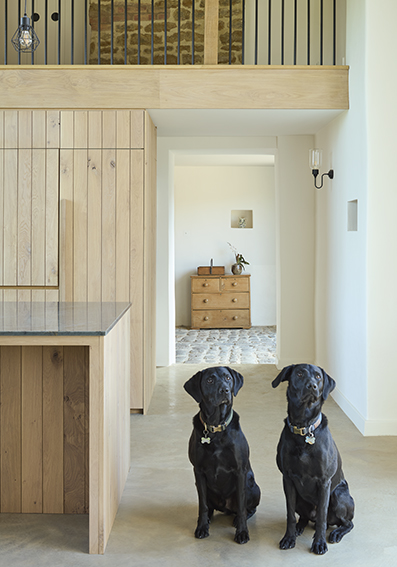
This Grade Il listed 17th Century farmhouse has been carefully reworked into a healthy, low-energy family home.
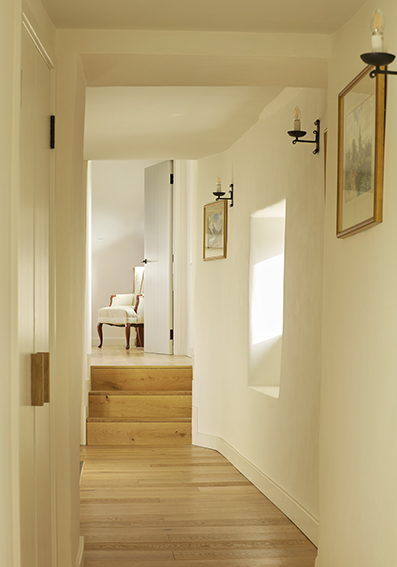
A breathable, fabric-first retrofit approach upgrades the entire envelope, wood fibre insulation, lime plaster, clay finishes and recycled foam-glass floors, delivering a 79% improvement in energy performance, alongside triple glazing and low-carbon heating.
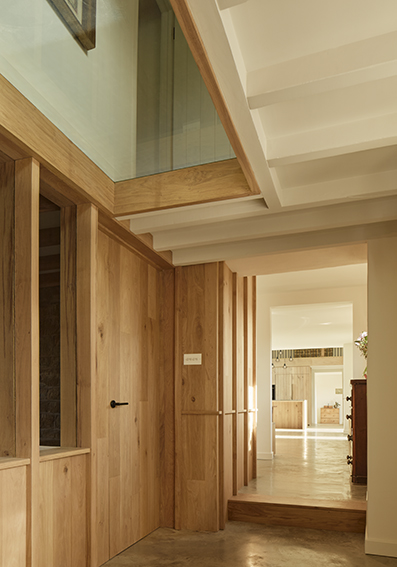
Fragmented volumes are reconnected, barn openings reinstated, and natural light restored, without forcing open-plan living.
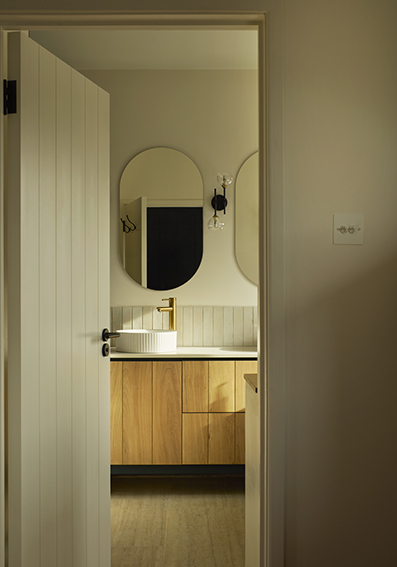
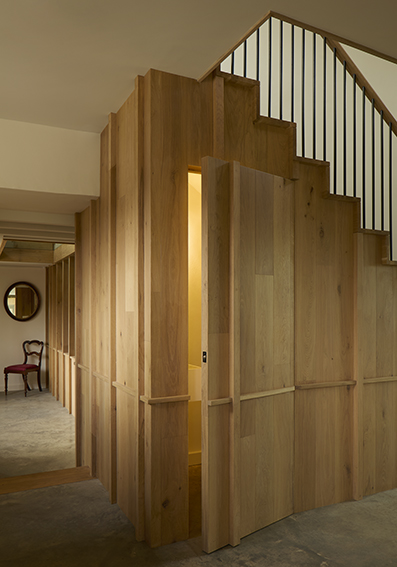
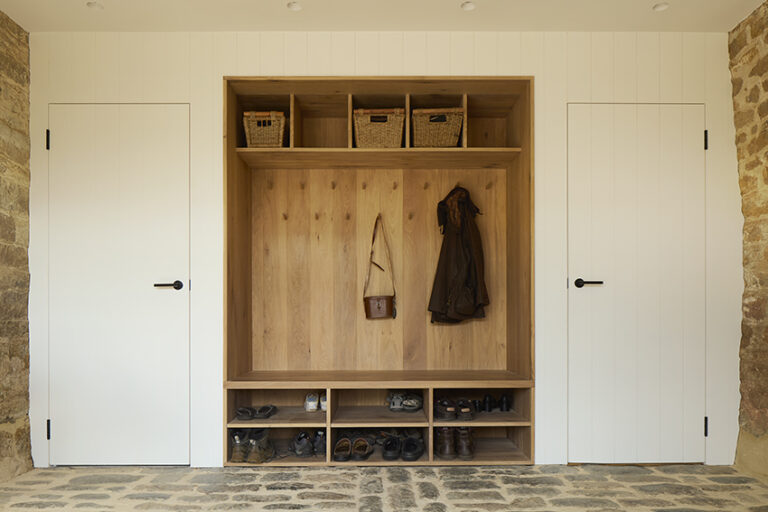
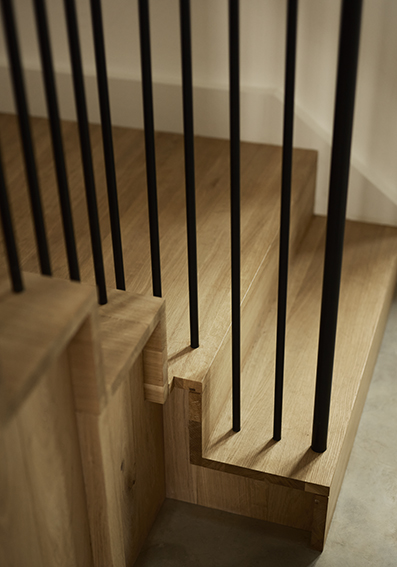
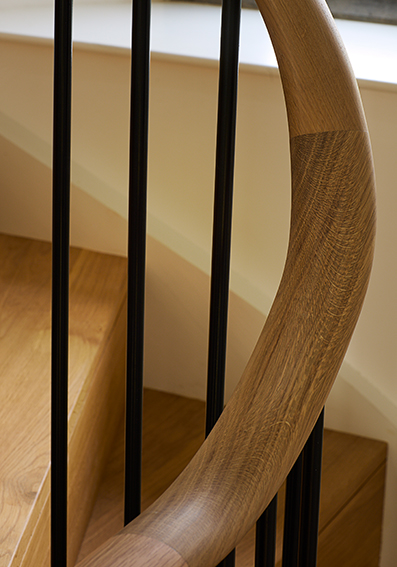
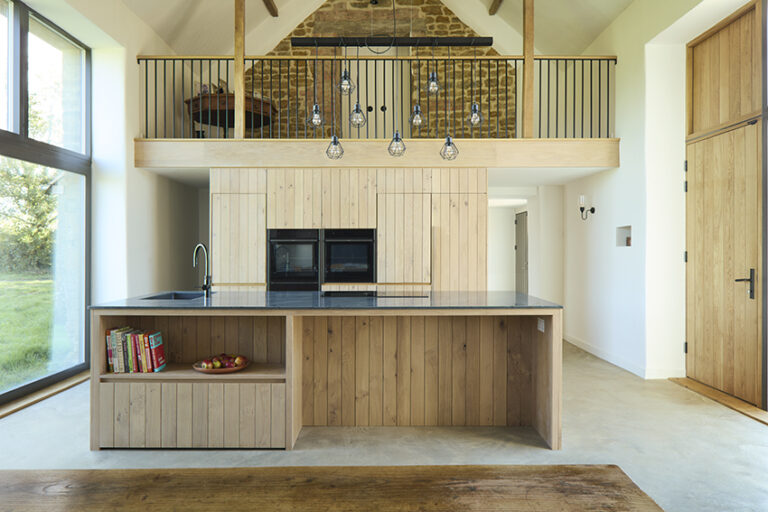
Inside, salvaged beams, cobbles, flagstones and oak sit quietly against a central oak kitchen, balancing heritage with contemporary life.
A sensitive collaboration with conservation officers has ensured every intervention respects and strengthens the listed fabric.
This property clearly shows how historic buildings can be made future-ready, carefully, materially, and with real restraint.
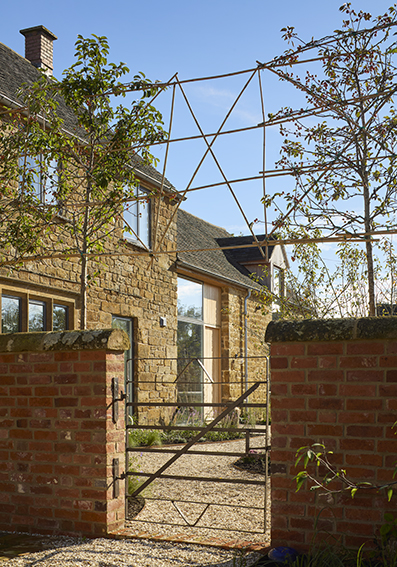
Originally a 17th century cottage with adjoining agricultural barns and a characterless 20th century addition. The project involved the complete retrofit and renovation of the property, the rearrangement of the internal layout to incorporate the barns into the living space and the sensitive restoration of the building’s character using traditional materials such as lime & hemp plaster, wood fibre insulation and solid oak fittings. The thermal efficiency of the building was drastically improved with triple glazing, air source heat pump and MVHR.
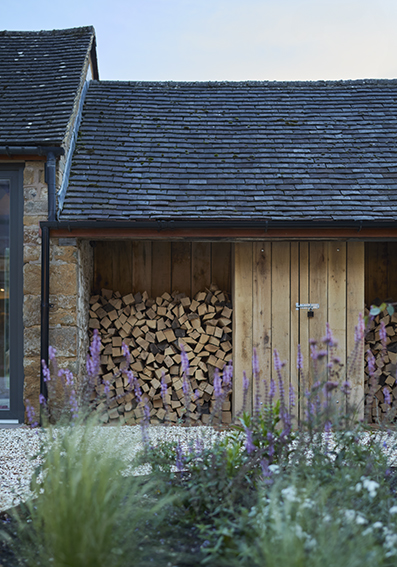
In addition, the landscaping of the grounds and the upgrading of the external buildings has turned a tired and impractical house in to a spacious, comfortable family home suited to modern day living inside and out.